


Warm Light, Better Evenings: Why Colour Temperature Matters
Two lamps can produce roughly the same amount of light and still make a room feel completely different. One can feel soft, calm and inviting. The other can make the same furniture, colours and materials suddenly appear colder.
The difference is often not brightness at all. It is colour temperature. Understanding this one detail makes choosing lighting for your home much easier.
What Colour Temperature Actually Means
Colour temperature describes how warm or cool a light appears and is measured in Kelvin, usually shown as K. The lower the number, the warmer the light tends to appear. As the number increases, the light becomes more neutral and eventually cooler in appearance.
For example, a warm 2700K light has a softer, slightly golden character, while 4000K appears considerably whiter and more neutral. Neither is automatically better. It depends entirely on the room and the atmosphere you want to create.
Why Warm Light Works So Well at Home
Think about the moments when your home feels most comfortable. Dinner at the table. Reading on the sofa. A quiet bedroom at the end of the day. Friends staying longer than expected. These moments rarely need extremely bright, cool light.
Warmer lighting creates a softer visual environment and works particularly well with the materials commonly found in living spaces: wood, warm textiles, natural stone, woven fibres and muted colours. It does not simply illuminate those materials. It helps bring out their warmth.
2700K: A Good Place to Start
For many living spaces, around 2700K is a useful starting point. It provides enough clarity for everyday life while maintaining the warm atmosphere people often want in their homes. Living rooms, bedrooms and dining spaces can all work particularly well with light in this range.
Go warmer and the effect becomes more intimate. Go cooler and the room begins to feel brighter and more neutral. There is no rule saying every lamp in your home needs to use exactly the same colour temperature, but keeping lights within the same general range in one room usually creates a more cohesive result.
The Living Room
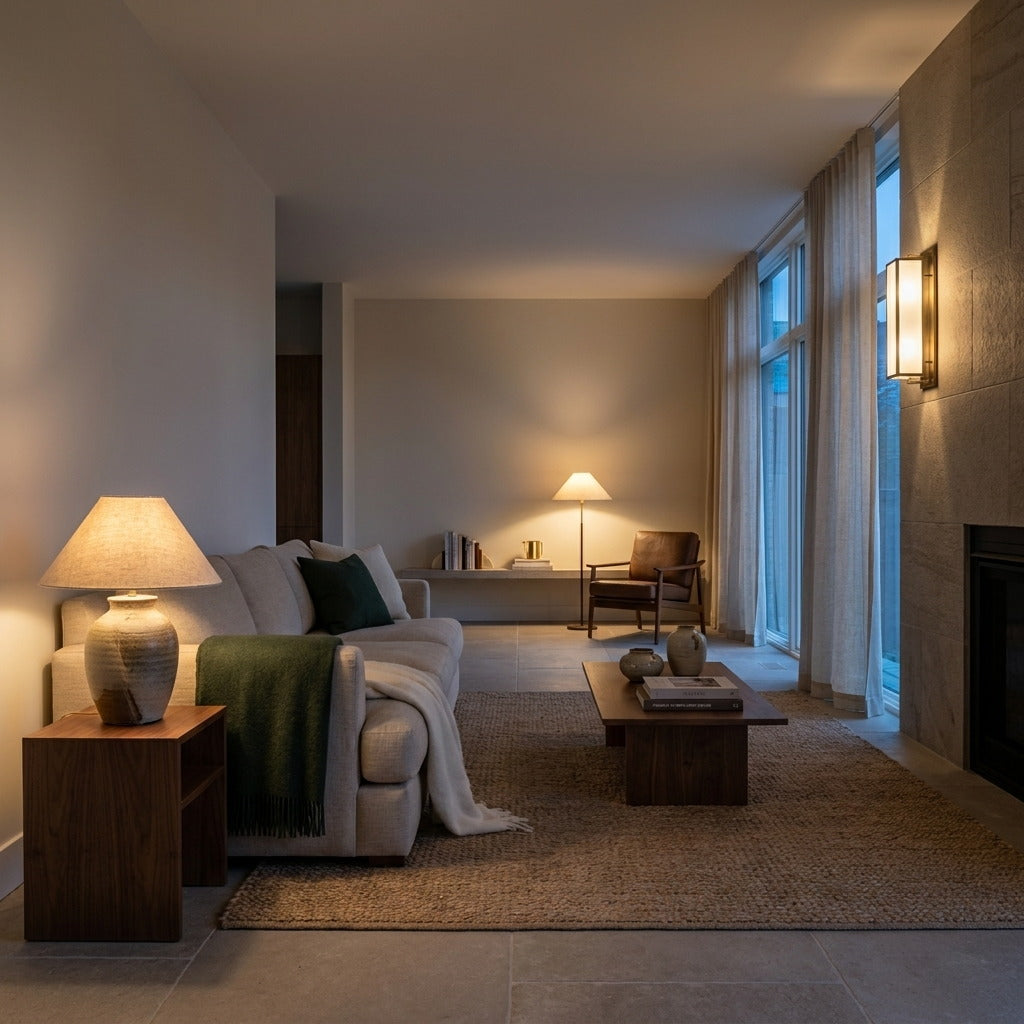
The living room changes throughout the day. Natural daylight may dominate in the afternoon, while in the evening the room becomes entirely dependent on artificial light. This is where warm lighting comes into its own.
A table lamp beside the sofa, a floor lamp in a darker corner and a softer wall light can create several smaller pools of illumination rather than flooding the entire room from above. The result feels calmer because the light follows the way you actually use the space. You can still have brighter general lighting when you need it. You simply do not have to use it all evening.
Around the Dining Table
Dining spaces are another natural home for warm light. The goal here is usually not maximum visibility. You want enough light to see the table comfortably while maintaining an atmosphere that encourages people to stay.
A pendant above the table can provide that focal point. Its colour temperature then determines much of the character of the space beneath it. Warm light complements wood, ceramics, glassware and food particularly well, while also visually separating the dining area from brighter parts of an open-plan home.
In the Bedroom
The bedroom is one of the clearest examples of a room where brighter does not necessarily mean better. Strong overhead lighting can be useful at certain moments, but bedside lighting should usually have a different purpose. It should help the room become quieter.
Warm table lamps or wall lights provide enough illumination for the end of the day without making the bedroom feel like a workspace. Position matters too. Keeping light lower in the room often feels softer than relying entirely on fixtures above eye level.
When Cooler Light Makes Sense
Warm light does not need to be everywhere. There are places where a more neutral light can be useful. A home office, utility area or another task-focused space may benefit from clearer, more neutral illumination, particularly during the day.
The important distinction is between spaces designed primarily for activity and those designed for relaxation. Rather than choosing one colour temperature for the entire house, think about what each room asks you to do. Then choose the light accordingly.
Do Not Forget the Shade
The bulb is only part of the result. The material surrounding it can change the light considerably. A woven or fabric shade may soften and diffuse the glow. Frosted glass can distribute light more evenly. An open fixture can create a more direct and defined effect.
Even two lamps using identical bulbs can therefore feel very different once switched on. When choosing a lamp, look beyond how it appears during the day. Think about what happens to the room when the light passes through it.
Brighter Is Not Always Better
One of the easiest mistakes to make with lighting is trying to remove every shadow. A comfortable home does not need to be uniformly bright. In fact, some variation is exactly what creates depth.
Allow certain corners to remain softer. Use focused light where it is useful. Let a table lamp illuminate one part of a room while another remains subdued. The contrast between those areas is often what makes evening lighting feel atmospheric rather than functional.
Think About How You Want the Evening to Feel
Choosing a light becomes much simpler when you stop asking only, “Is this bright enough?” Ask another question: “How do I want this room to feel at night?”
For the places where you relax, eat, read and spend time with people, the answer is often something warm, comfortable and considered. And sometimes changing that feeling does not require changing the entire room. It only requires changing the light.
Create a warmer home
Discover Menazz lighting selected to bring warmth, atmosphere and considered light into everyday spaces.