


How to Choose the Right Lighting for Every Room
The right lighting can completely change how a home feels. A room can be beautifully furnished, carefully styled and filled with pieces you love, but if the lighting is too harsh, too cold or simply in the wrong place, something will always feel slightly off.
Good lighting does more than help you see. It creates warmth, gives a room depth and draws attention to the places you naturally want to spend time in. The good news is that choosing lighting does not need to be complicated. Start with how you use the room, then build the light around it.
Start With the Room, Not the Lamp
It is easy to choose a lamp because you like how it looks. But before thinking about shape, material or finish, think about what actually happens in the room. Do you eat, work and talk around the dining table? Do you read on the sofa in the evening? Does your bedside lamp need to provide enough light for a book without illuminating the entire bedroom?
The best lighting responds to those everyday moments. Look at where people naturally sit, move and gather. Those are usually the places where light matters most.
Think in Layers
Most rooms benefit from more than one source of light. A single ceiling fixture can illuminate an entire space, but on its own it often makes a room feel flat. Adding smaller sources of light at different heights creates depth and makes the atmosphere much softer. There are three simple layers to consider.
Ambient lighting
This is the general light in a room. Pendant lights and other larger fixtures often provide this first layer and make the space comfortable to move through.
Task lighting
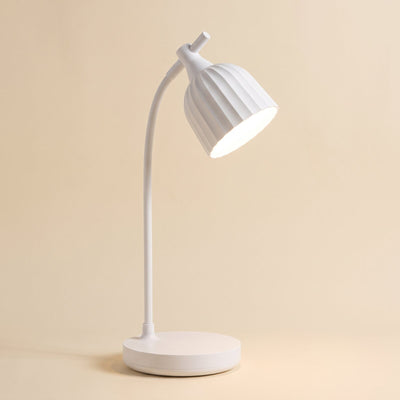
Task lighting gives you more focused light where you actually need it. A table lamp beside a chair, for example, can create a comfortable place to read without lighting the entire room.
Accent lighting
The final layer is about atmosphere. A smaller lamp or wall light can highlight a corner, create a pool of warm light or bring attention to a material or surface. You do not need all three everywhere. The idea is simply to avoid asking one light to do everything.
The Living Room
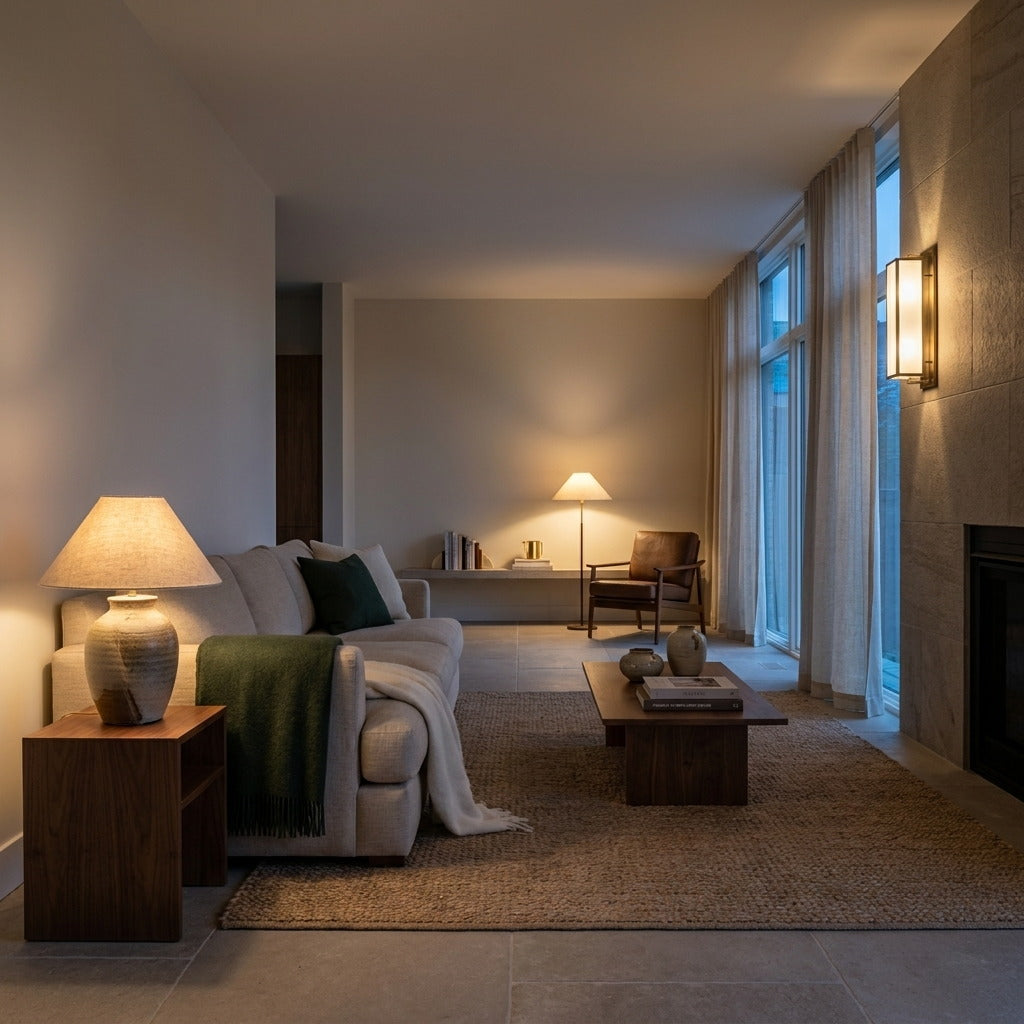
Living rooms usually need the most flexibility. During the day, natural light may do most of the work. In the evening, the room becomes softer and more intimate, and that is where several smaller light sources work particularly well.
Instead of relying only on the main ceiling light, introduce light at different heights. A table lamp on a sideboard, a floor lamp beside a chair or a wall light can each create their own small area of warmth. The goal is not to make every corner equally bright. Some contrast between light and shadow is what gives a living room atmosphere.
The Dining Area
Lighting above a dining table has a clear job: bring people together. A pendant light naturally creates a focal point and visually anchors the table within the room. It should illuminate the surface comfortably without feeling harsh or overpowering the space.
The height matters too. A pendant that hangs too high can feel disconnected from the table. Too low, and it begins to interrupt sightlines. Aim for a position that feels connected to the table while still allowing everyone to see comfortably across it. Warm light works particularly well here. Dinner rarely needs the brightest light in the house.
The Bedroom
Bedrooms benefit from calm, low-level lighting. A bright ceiling light may be useful when getting dressed or cleaning, but it is rarely the light you want before going to sleep. Bedside lamps create a much softer atmosphere and give each side of the bed its own useful source of light.
If you read in bed, pay attention to the direction of the light as well as its brightness. The goal is enough illumination to read comfortably without filling the whole room with glare. Keep the overall palette warm and simple.
Wall Lights for the Spaces in Between
Not every part of the home needs a table or floor lamp. Hallways, entrances, bedside areas and smaller corners are often where wall lights make the most sense. They provide light without using valuable floor or surface space and can also become part of the architecture of a room.
A well-positioned wall light can make an otherwise overlooked area feel considered. This is especially useful in narrower spaces, where adding furniture purely to hold a lamp would feel unnecessary.
Choose Warmth Over Brightness
Brightness matters, but the character of the light matters just as much. For living spaces, warmer light generally creates a more relaxed and inviting atmosphere. Cooler light can be useful in spaces where visibility and concentration are the priority, but it can feel clinical when used throughout a home.
Think about how you want the room to feel after sunset. For most living rooms, bedrooms and dining areas, soft and warm usually wins over extremely bright.
Let the Materials Work With the Light
A lamp changes when it is switched on. Fabric, woven fibres, glass, metal and ceramic all interact with light differently. Some shades diffuse it softly. Others direct it downward or allow patterns of light to appear around the room.
That is why the material of a lamp is not only a design decision. Think about the effect you want when the light is actually on. A beautiful lamp should work both as an object during the day and as a source of atmosphere in the evening.
The Simplest Rule
You do not need to perfectly light every square metre of your home. Start with the places you actually use. The chair where you read. The table where people gather. The bedside table you reach for every evening. The hallway you walk through when the rest of the house is dark.
Light those moments well, and the room around them begins to feel different too. Because ultimately, good lighting is not about making a home brighter. It is about making it feel better to live in.
Ready to change how your home feels?
Explore the Menazz collection and discover lighting chosen for warmth, atmosphere and the rooms you actually live in.