


5 Simple Ways to Make Your Home Feel Warmer with Light
Making a home feel warmer does not always mean changing the furniture, repainting the walls or filling a room with more things. Sometimes the biggest difference comes from light.
Where a lamp sits, what it illuminates and how different sources of light work together can completely change the atmosphere of a space. And it does not require a complicated lighting plan. Here are five simple ways to make a room feel warmer, calmer and more inviting.
1. Turn Off the Main Light
Start with the easiest change. In many homes, one ceiling light is expected to illuminate the entire room. It is practical, but it often creates a very even kind of brightness that leaves little room for atmosphere.
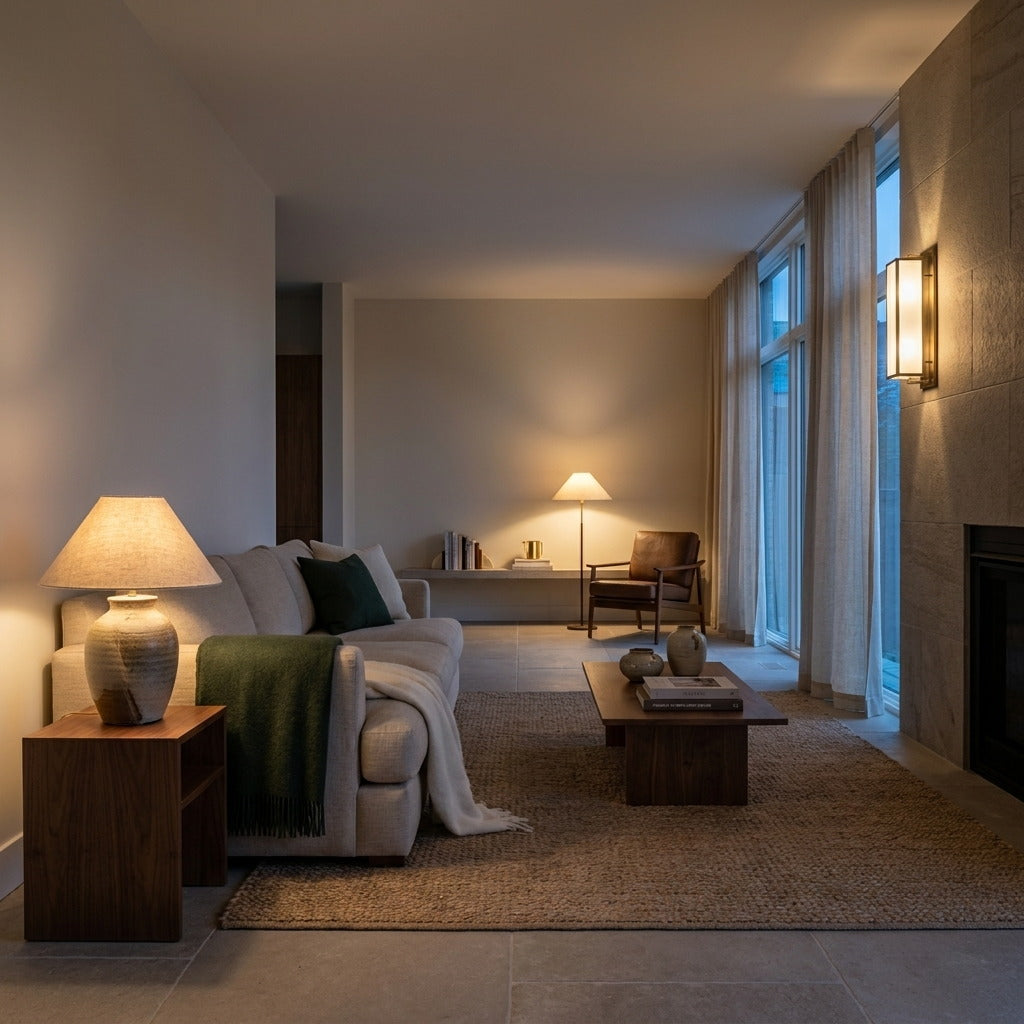
Try turning it off. Instead, use two or three smaller sources of light around the room. A table lamp beside the sofa. A floor lamp near a reading chair. A wall light illuminating a quieter corner.
You will immediately notice that the room develops more depth. Some areas become brighter, others remain softer, and the space starts to feel much more relaxed.
2. Put Light Where Life Actually Happens
Rather than trying to illuminate an entire room equally, look at the places you naturally use. The side of the sofa where you read. The dining table where everyone gathers. The bedside table you reach for at the end of the day. The console in the hallway that you pass every evening. These are the places that deserve light.
A carefully positioned lamp does more than brighten that particular spot. It creates a visual centre within the room and naturally draws you towards it. Think in moments rather than square metres.
3. Use Different Heights
One of the simplest ways to make lighting feel more considered is to avoid placing every source at the same height. A pendant brings light down from above. A wall light works somewhere around eye level. Table and floor lamps bring the light lower into the room.
Combining these heights makes a space feel layered. It is particularly effective in larger living areas, where a single ceiling fixture can struggle to create intimacy. You do not need many lamps to achieve this. Even two sources at different heights can make a noticeable difference.
4. Let Materials Soften the Light
The character of a lamp is determined by more than the bulb inside it. The material surrounding the light matters too. Fabric and woven shades can soften the glow and create subtle texture. Ceramic bases bring a natural, tactile quality to a room. Glass and metal can create a cleaner, more defined effect.
Natural materials work particularly well when you want a space to feel warm without making it overly decorated. Look at the lamp when it is switched off, but also imagine what happens when it comes on. The best pieces contribute to the room in both moments.
5. Leave Some Shadow
It can be tempting to keep adding light until every part of a room is perfectly visible. You do not have to. Shadow gives light its impact.
A softly illuminated table feels warmer when the corner behind it is slightly darker. A wall light becomes more noticeable when it is not competing with several equally bright fixtures. This contrast creates depth and gives the eye somewhere to rest.
Especially in the evening, a home does not need to feel as bright as it does during the day. Let it change with the time.
Small Changes, Different Atmosphere
Creating a warmer home is rarely about adding more. It is about becoming more intentional with what is already there.
Move a table lamp to the corner you actually use. Switch off the overhead light in the evening. Introduce another source of light at a different height. Allow part of the room to stay a little darker.
Small changes like these alter the way a room feels without changing the room itself. Because the best lighting does not demand attention. It simply makes you want to stay a little longer.
Find the light for your space
Explore the Menazz collection and discover lighting designed to bring warmth and atmosphere into everyday moments.